
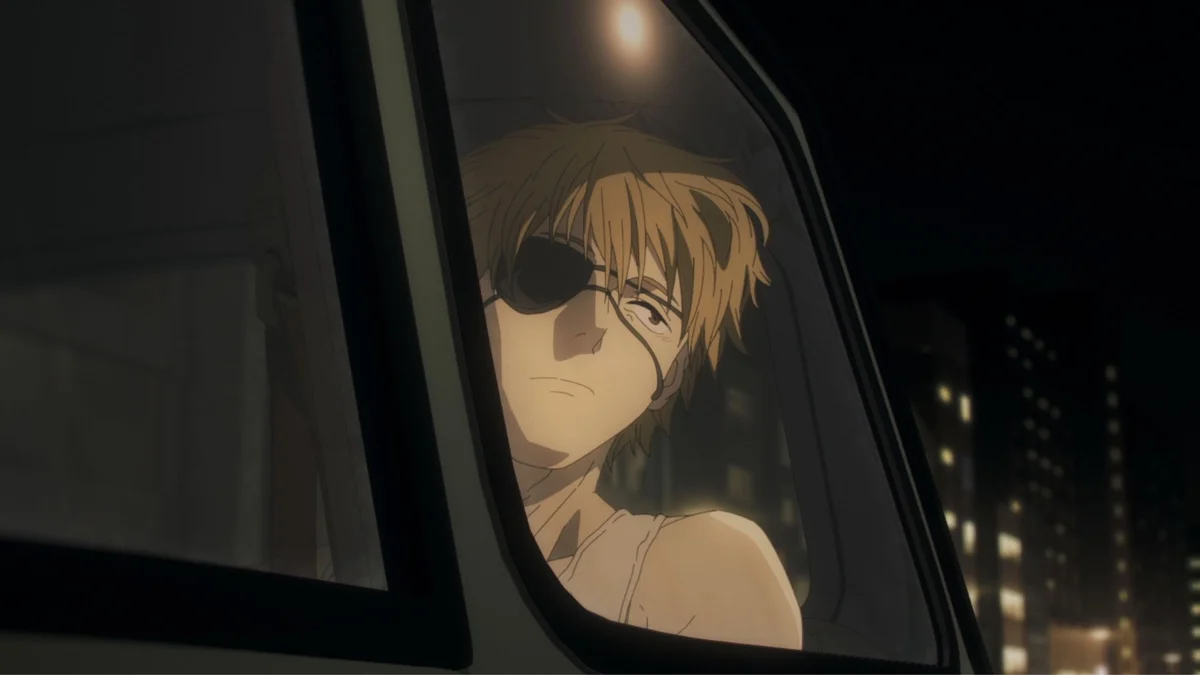
Denji is a teenager trying to repay the debt his father left behind. He hunts devils for the yakuza with Pochita, a small chainsaw devil who is both his partner and his closest companion. They struggle to afford the basics, and that poverty shapes the action that follows.
What does Denji want before the chainsaws?
Denji’s first dreams are modest: a full meal, a place to sleep, the chance to be close to someone. They are shaped by deprivation. Pochita’s presence gives him companionship, but also a working relationship: the two hunt devils and share the proceeds. The story asks what a person might call a good life when they have never had much choice about the conditions they live in.
After a betrayal, Pochita makes a contract that saves Denji and gives him the power to become Chainsaw Man. That transformation brings him into Public Safety, where devil hunters work under a state agency. Denji’s new job is safer than his old one in some ways, but it also gives other people control over his work and rewards his compliance with the ordinary comforts he has been denied.
The contrast changes how the action reads. Denji is not introduced as a polished hero with a grand ideal. He is a young person trying to make life less painful, and the adults around him can exploit that need. His new colleagues, including Aki Hayakawa and Power, bring their own priorities into the unit. Cooperation is useful, but it does not immediately make them a family.

Image credits
Chainsaw Man
(C)藤本タツキ/集英社・MAPPA
Image sourceWhy is this a rougher kind of devil hunt?
Devils are tied to human fears, and their forms can turn those fears into physical threats. The series’ violence is deliberately graphic, but the spectacle sits beside an unusually plain account of need: Denji wants food, comfort and recognition. The mismatch between those everyday desires and the grotesque world he inhabits gives the story its dark comedy.
In his premiere review, GameSpot critic Mat Elfring notes that the episode adapts the manga’s first chapter closely while leaning into horror and body horror. The premiere’s shift from Denji and Pochita’s sparse daily life to an abrupt bodily transformation gives the series a jolt between intimacy and grotesque action.

Image credits
Chainsaw Man
(C)藤本タツキ/集英社・MAPPA
Image sourceWhy put a monster beside an office?
Denji’s transformed body makes the work grotesquely visible: blades occupy the places where an ordinary human face and hands would be. Makima’s office presents authority through a desk, a chair and calmly folded hands. Both images belong to his new life. A job can supply food and shelter while also placing his extraordinary body under somebody else’s direction.
The sleeping boy in a car supplies a quieter image of the same protagonist. He can be vulnerable and exhausted without performing the role the title advertises. Keeping that human scale beside the chainsaws is what makes the ordinary wants matter; the story has something smaller than victory for Denji to hope for.

Image credits
Chainsaw Man
(C)藤本タツキ/集英社・MAPPA
Image sourceWhere does the first season leave you?
The opening episode gives you the central relationship and the premise of Denji’s new job. Start there, then follow the 12-episode television series, a roughly five-hour commitment.
A violent, exploitative world continually reframes its protagonist’s simple wants. Be prepared for graphic gore and sexualised material; the rough tone is not incidental to the premise.


