
The goddess rejects Makoto Misumi, but Emma’s life has not been waiting for that rejection to happen. The Highland orc belongs to a community and faces a danger of her own: she is to be offered to the powerful dragon Shen. The newcomer arrives in the middle of somebody else’s predicament.
There is an obvious adventure in proving a cruel goddess wrong. TSUKIMICHI: Moonlit Fantasy finds another one nearby: Makoto can help Emma, learn something from her and discover that the people he meets have plans beyond being impressed by him. His strength gives those encounters possibilities. It does not supply all their purpose.
The first adaptation visual makes the power fantasy look suitably imposing. A dragon and a huge spider surround Makoto; his own masked figure is dwarfed by their scale. It promises formidable company. The opening’s more interesting question is what that company will want once the confrontation is over.
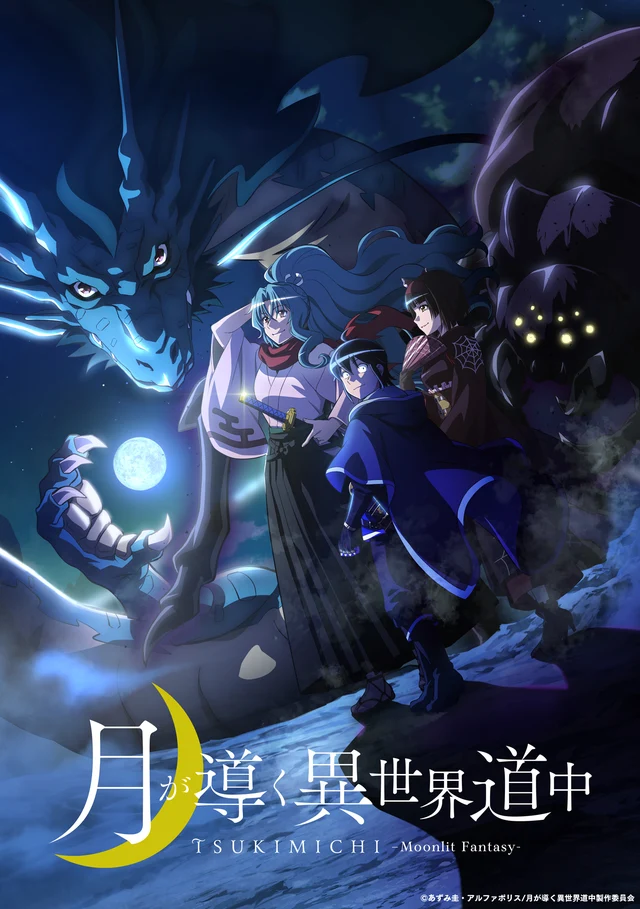
Image credits
TSUKIMICHI: Moonlit Fantasy
©あずみ圭・アルファポリス/月が導く異世界道中製作委員会
Image sourceWhat can Emma teach the person who saves her?
Makoto has been summoned to another world and denied the welcome associated with being its hero. The goddess cares about beauty, and he fails her assessment. He is thrown into a wilderness far from the human society she favours. The authority that should have explained his new importance instead decides that he does not fit.
The rejection does not make him incapable. His extraordinary strength survives the loss of official approval. That leaves a useful separation between being powerful and being recognised as the sort of person a powerful institution wants.
Emma gives that strength a particular person to matter to. She is attacked by a monster; Makoto helps her, then learns of the threat hanging over her people. Her predicament makes the opening move beyond his insult without pretending the insult never happened.
Crucially, Emma is also a capable magician. She teaches Makoto spells. The person he rescues can become his teacher because she knows this world’s magic and he has only just arrived. His exceptional capacity and her knowledge are different kinds of advantage.
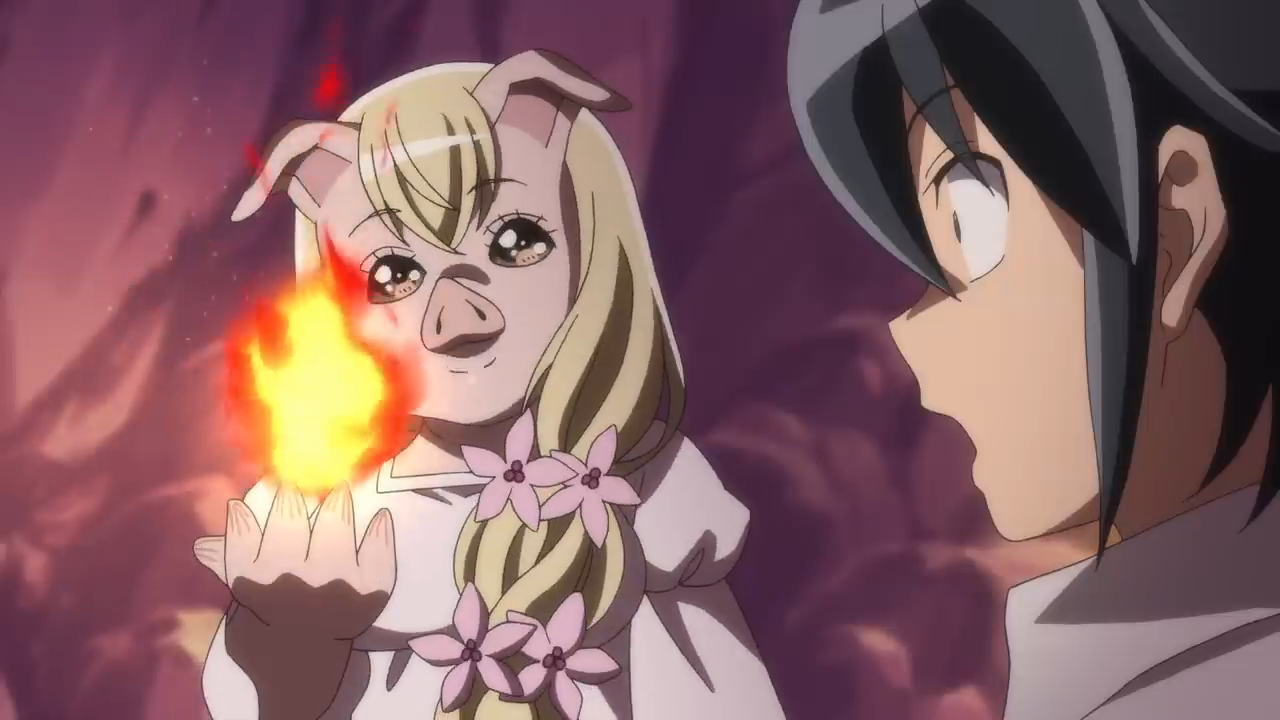
Image credits
TSUKIMICHI: Moonlit Fantasy (original 2021 television, episode 1)
©あずみ圭・アルファポリス/月が導く異世界道中製作委員会
Image sourceThat exchange gives the relationship more life than another demonstration of how strong he is. Emma has something to lose, something to explain and something to offer. Makoto does not need the goddess to revise her verdict before he can become useful, and being useful does not stop him needing help.
Why is a place to live a different reward from a victory?
The early agreement with Shen opens access to a mist-shrouded demiplane, a separate space the dragon can create. Its fertile land offers room for the Highland orcs to settle, sheltered from the goddess’s gaze. An encounter with an extraordinary creature becomes a possible location for everyday life.
That changes the scale of usefulness again. Makoto can intervene in a danger; a settlement requires room for many people to remain after it. The new space matters because it can be inhabited, rather than functioning only as evidence that its owner possesses another impressive ability.
Makoto brings existing communities into contact. Emma and the Highland orcs already have relationships and a shared situation. The demiplane changes their options. Preserving that distinction makes the founding fantasy less empty: the people moving in bring a life with them.
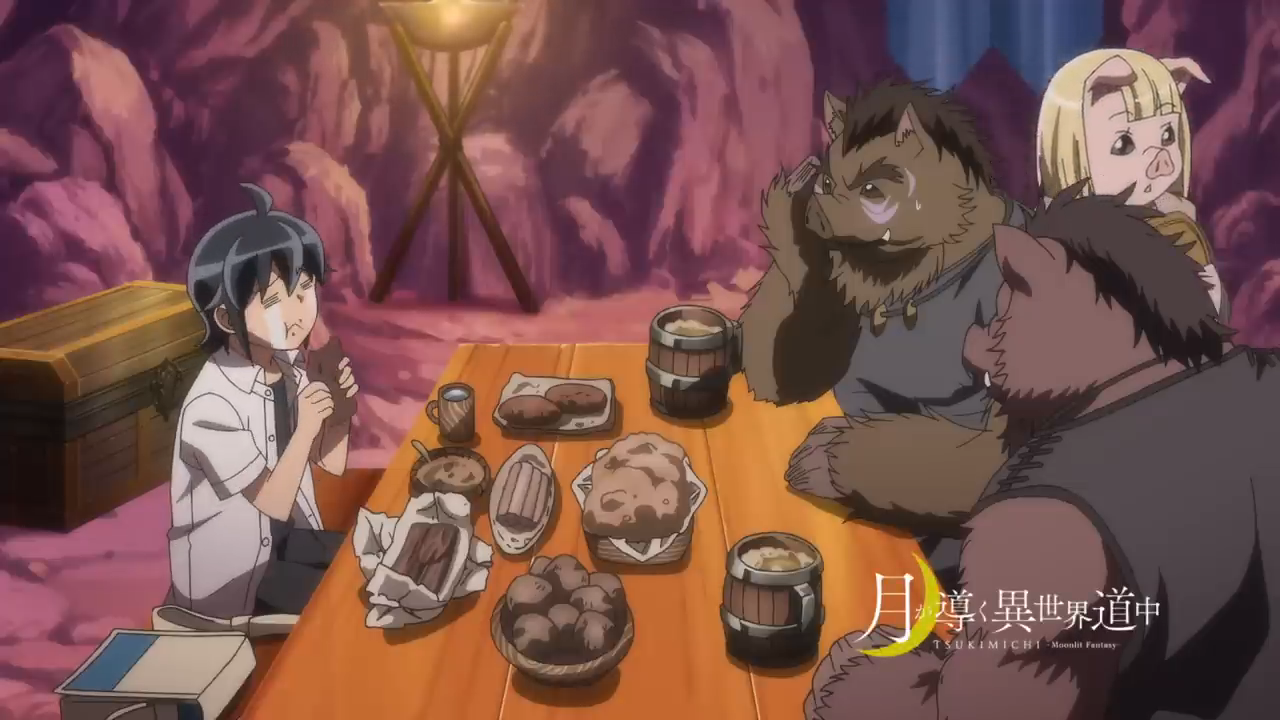
Image credits
TSUKIMICHI: Moonlit Fantasy (original 2021 television, episode 1)
©あずみ圭・アルファポリス/月が導く異世界道中製作委員会
Image sourceBy episode 3, Elder Dwarves and other groups are arriving too. The newcomers make this more than a private hideaway for the lead and his closest companions. There are inhabitants whose skills, allegiances and expectations enter with them. A powerful visitor has become part of an arrangement that keeps growing.
What does a dragon want after becoming a companion?
Shen takes human form as Tomoe, but the transformation does not erase her interests. She likes Japanese things, particularly period dramas. A creature who can make an entire separate space is also curious about the stories in Makoto’s old world. His memories contain an attraction that combat alone cannot explain.
That is a useful comic change of scale. The imposing dragon becomes somebody with tastes, questions and a strong inclination to act on them. Tomoe can take charge of an exchange while Makoto is still absorbing what his new circumstances mean. She does not spend every conversation waiting to applaud his latest ability.
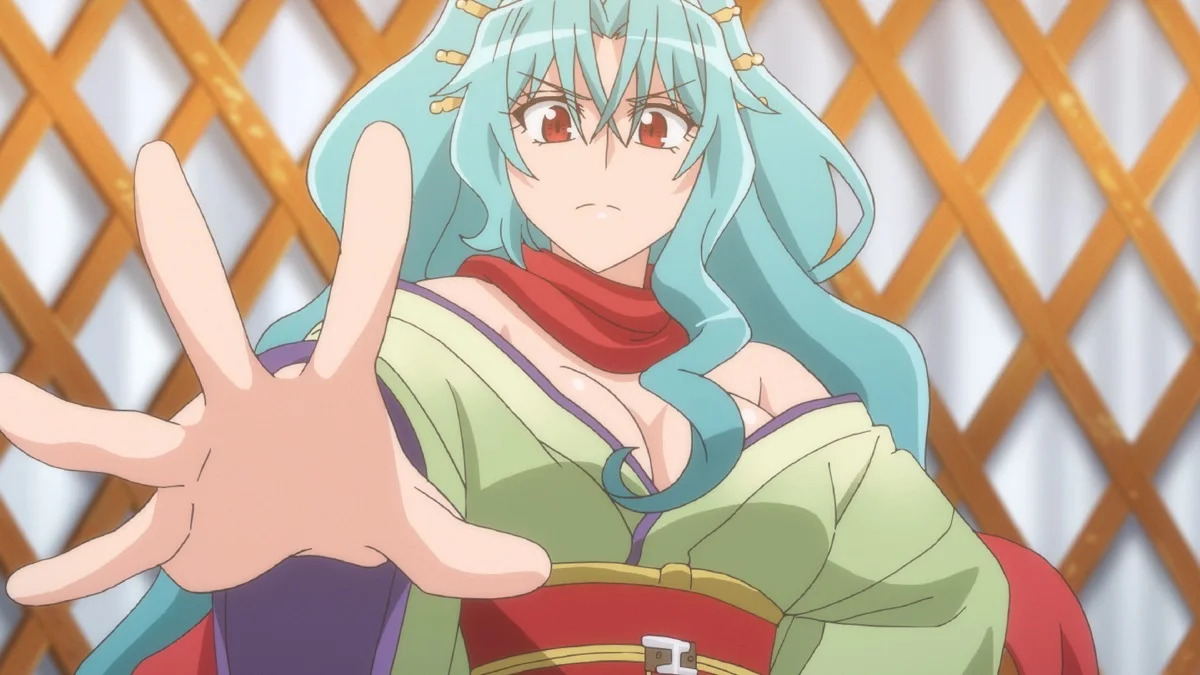
Image credits
TSUKIMICHI: Moonlit Fantasy
©あずみ圭・アルファポリス/月が導く異世界道中製作委員会
Image sourceThe spider who becomes Mio brings a different energy. Her ravenous hunger makes the early encounter dangerous; joining the group gives that intensity a continuing presence beside Tomoe’s enthusiasm. Makoto has gained formidable companions, but he has also gained people who want things. The room around an overpowered lead can become livelier instead of falling silent.
The relationship is not equal simply because it is funny. Shen’s contract gives Makoto an advantageous position, and the language of service remains. Meru Clewis’s premiere review calls attention to the “master” and “slave” wording. The companions’ initiative makes them enjoyable characters; it does not remove that hierarchy. A story about finding somewhere to belong can still leave us asking what belonging requires from the people around its hero.
Why does meeting humans become a problem?
Episode 3 tests a tempting assumption. Surrounded by non-human neighbours, Makoto wants contact with people like himself. Yet the town he approaches meets him with weapons. Being human does not automatically make him a welcome guest.
That encounter gives the opening another direction. Makoto has already found people willing to deal with him outside the society the goddess favours. Entering that society remains a separate difficulty. More strength cannot, by itself, make a conversation happen.
The comedy keeps putting the impressive and the inconvenient into the same picture. Tomoe can be an extraordinary dragon and an eager period-drama enthusiast. Makoto can have astonishing power and still struggle to make an ordinary arrival. The contrast gives their exchanges a particular rhythm: an apparent advantage opens a new practical or social problem, rather than finishing the scene’s work.
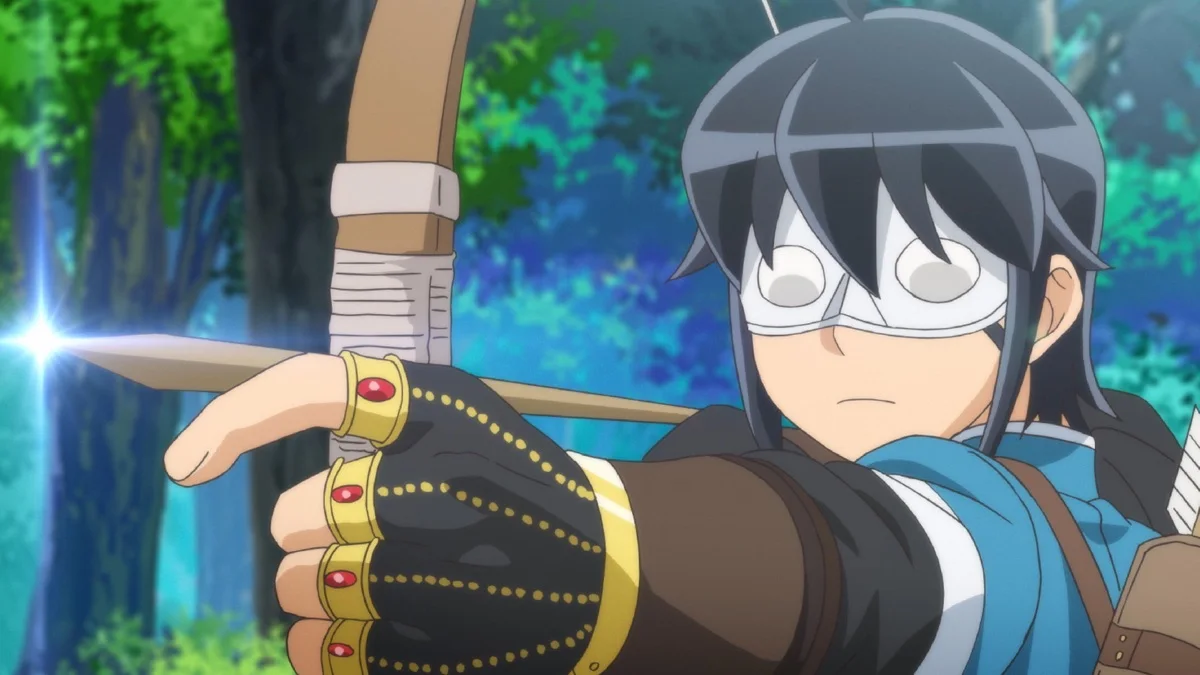
Image credits
TSUKIMICHI: Moonlit Fantasy
©あずみ圭・アルファポリス/月が導く異世界道中製作委員会
Image sourceThe bow-and-mask image makes that contrast visible. An archer’s concentrated pose shares the frame with an unusual disguise and conspicuous equipment. It is an individual, awkward-looking figure, rather than an abstract quantity of magical power. The picture can suggest both capability and the difficulty of fitting in without explaining every later use of his gear.
What changes is where the adventure looks for its next purpose. Makoto could spend his new life answering a goddess’s insult. Emma’s predicament, her teaching and the company that follows give him more interesting things to do. The pleasure is not only watching a rejected hero become important. It is seeing the people around him have something important to contribute.
Sources
- episode 1
- episode 2
- episode 3
- Original character profiles
- Original-series listing
- Meru Clewis’s premiere review
- Jessi Silver’s first-episode impressions
- Carla Carreon’s episode 3 discussion
- RABUJOI’s episode 3 reading
- MBS’s official release of original episode 1
- Alphapolis’ original adaptation announcement
- episode 3
- episode 5