
You can start JoJo’s Bizarre Adventure with nine episodes: Phantom Blood, the first part of the 2012 television adaptation. That invitation is not simply arithmetic. It is a particular story about a boy trying to be a gentleman while another boy makes his own home hostile to him.
If that conflict interests you, begin at episode 1. If you continue, episode 10 introduces Battle Tendency and Joseph Joestar, whose response to trouble is a marked change from Jonathan’s earnest approach. The first 26-episode production contains both parts, rather than one season standing for the whole franchise.
What are the first nine episodes inviting you into?
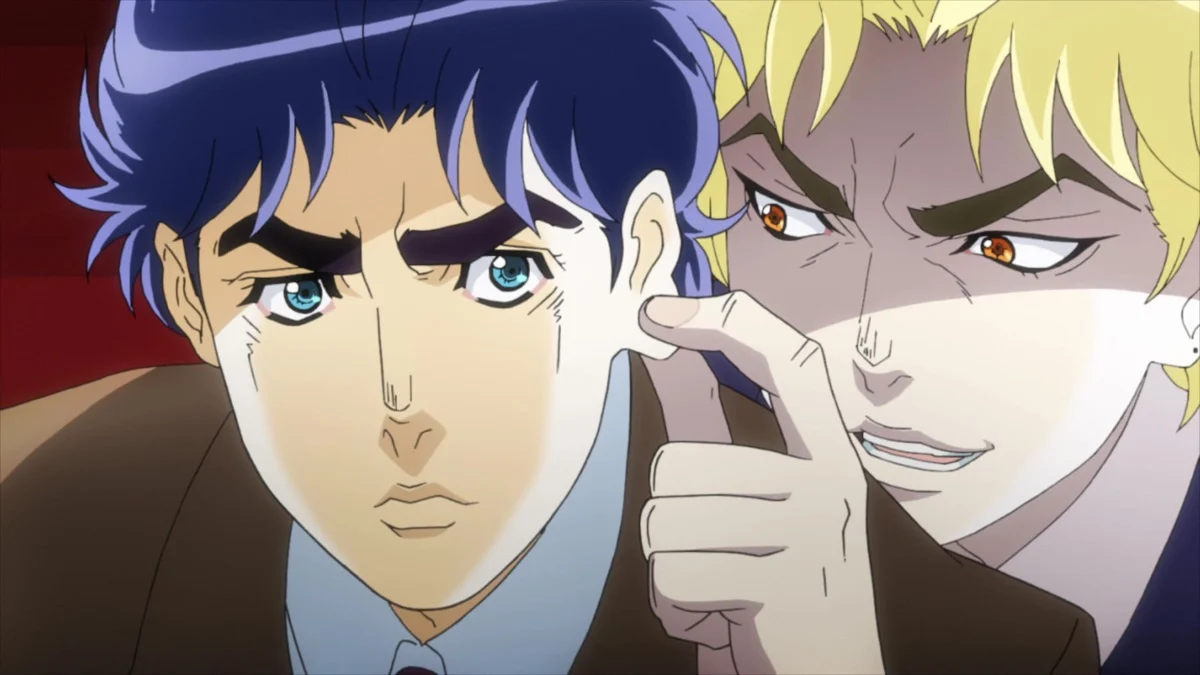
George Joestar takes Dio Brando into his household. Jonathan tries to befriend the boy his father has welcomed; Dio rejects him. Then Jonathan repeatedly finds himself compared with the accomplished newcomer. The person he hoped to welcome becomes someone against whom his own place is measured.
That gives the rivalry an unpleasant intimacy. Jonathan cannot leave the competition behind when he comes home, and behaving generously does not make Dio reciprocate. Being the family’s son does not protect him from the feeling that the new arrival is better at winning approval. The gentlemanly ideal has a concrete difficulty before it becomes a heroic pose.
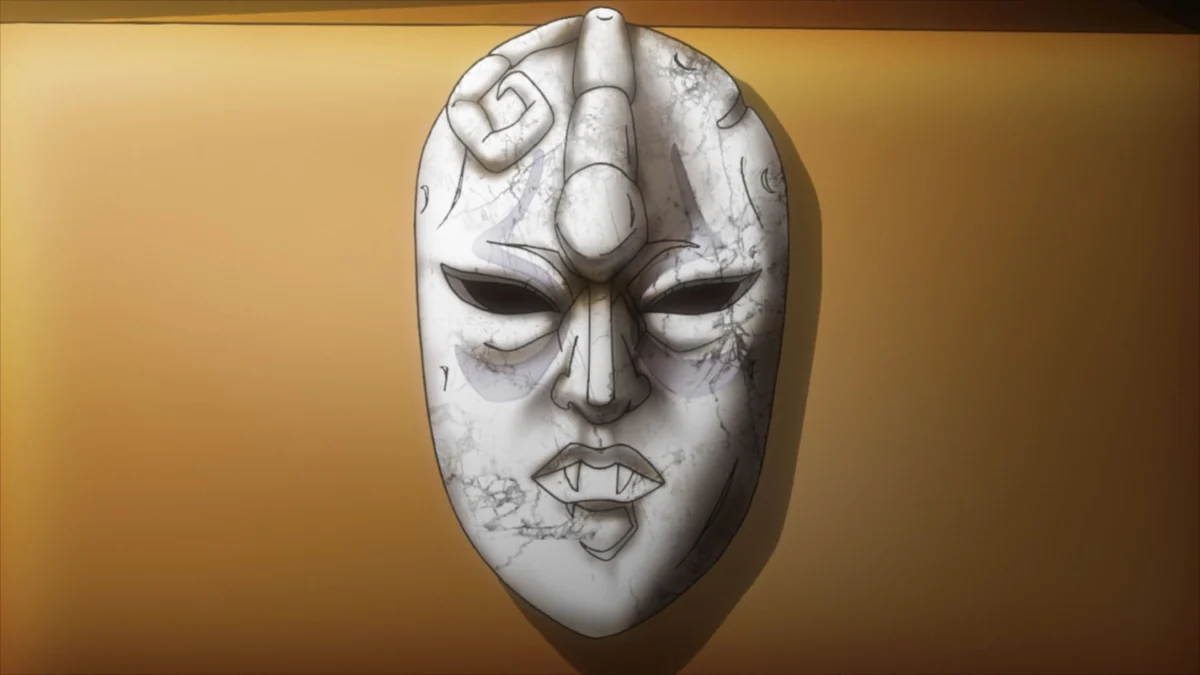
Image credits
JoJo’s Bizarre Adventure
© 2012 Hirohiko Araki / SHUEISHA JoJo’s Animation Project
Image sourceThe stone mask takes the story towards supernatural danger, but the household conflict supplies a reason for that danger to matter. This is an invitation to heightened family melodrama: hospitality, humiliation and the struggle over who gets to define the other boy. A viewer who dislikes grand antagonism may feel the excess early; someone who enjoys a rivalry becoming extravagant has something to follow well before a later part arrives.
The nine-episode boundary lets that first movement develop without asking you to look up its outcome. Jonathan and Dio’s conflict gives these opening episodes a story of their own.
Why is Joseph another invitation?
Battle Tendency begins in 1938. Joseph travels from London to New York with his grandmother Erina at Speedwagon’s invitation, and immediately gets caught up in trouble. The location, era and leading temperament change together. The new Joestar does not have to learn to matter in Jonathan’s household.
His approach also invites a different pleasure. Early in Part 2, Joseph turns an apparently successful enemy attack into a deception: what the opponent seems to have accomplished is not what has happened. Where Jonathan’s opening asks how to behave honourably towards someone who rejects him, Joseph’s early conflict makes misleading the opponent useful. A family inheritance can persist while the protagonist changes the terms of the encounter.
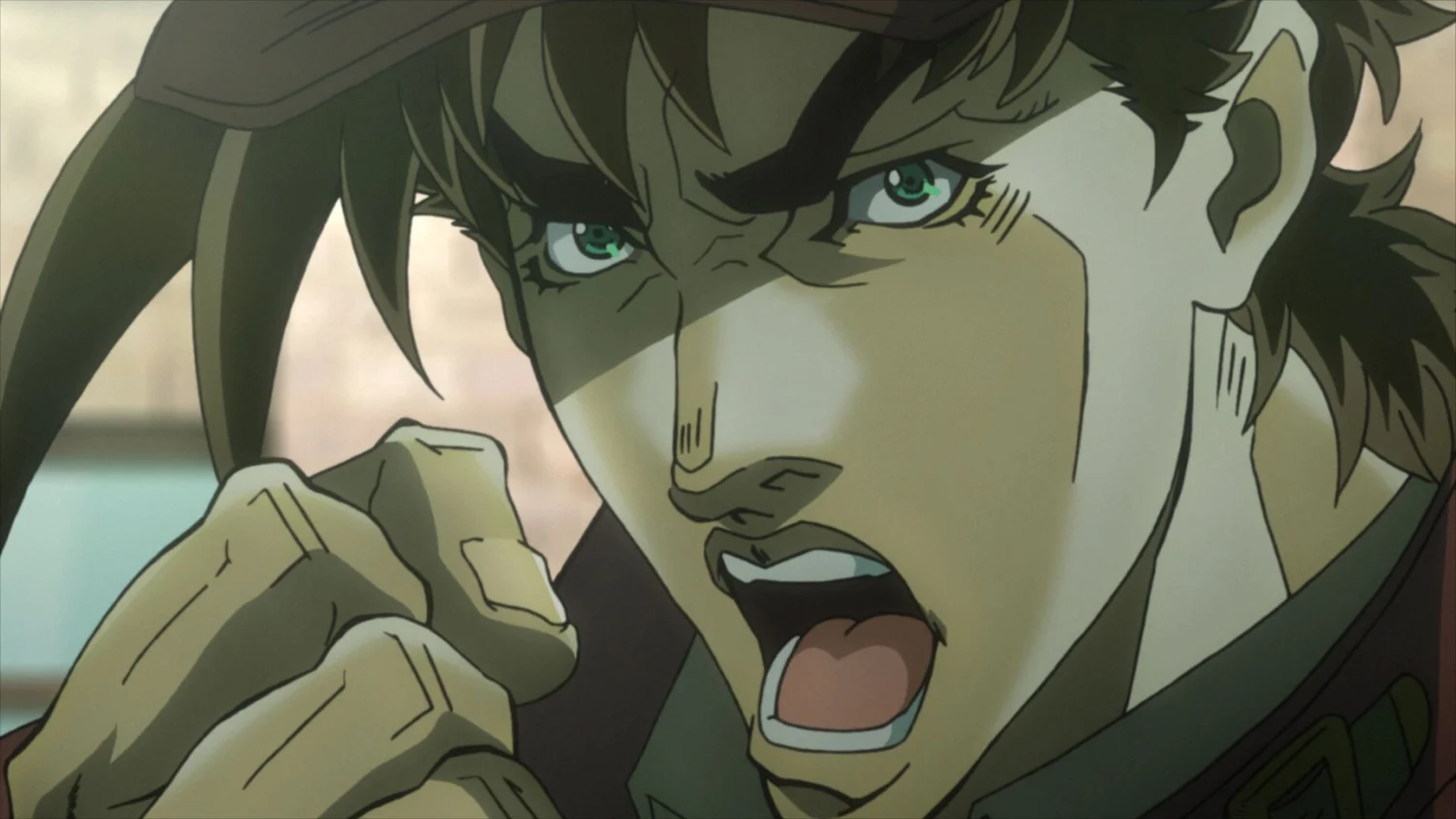
Image credits
JoJo’s Bizarre Adventure
© 2012 Hirohiko Araki / SHUEISHA JoJo’s Animation Project
Image sourceThat is a reason to try the next part if you liked the extravagant danger but want a less solemn leading presence. It is not a promise that one part repairs everything you disliked in another. Family history and supernatural conflict remain; the person meeting them behaves differently. Watching in order lets that contrast mean something.
What do “part” and “season” actually tell you?
The first television production groups its two parts as follows:
| Television episodes | Named part | Useful pause/resume point |
|---|---|---|
| 1–9 | Phantom Blood | First invitation: Jonathan and Dio’s rivalry |
| 10–26 | Battle Tendency | Resume at 10 for Joseph’s era; this adds seventeen episodes |
The total is nine plus seventeen, 26 episodes. Later productions have names such as Stardust Crusaders, Diamond Is Unbreakable and Golden Wind. A provider’s “season 1” label is less dependable than checking that the opening is the 2012 adaptation of Phantom Blood.
After nine episodes, decide whether you want the change of lead and approach. Episode 26 ends the first television production. Neither boundary erases what came before it; both give a long family saga a usable next decision.
Sources
Linked sources contain later story details.