
Image credits
Oblivion Island: Haruka and the Magic Mirror
(C)2009フジテレビジョン/Production I.G/電通/ポニーキャニオン
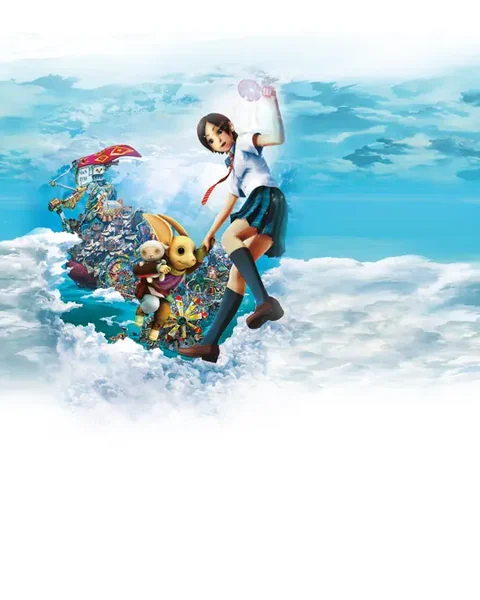
Image sourceA girl follows a fox-like creature into a world built from neglected belongings, hoping to recover a hand mirror left by her mother.
Haruka's guide is Teo.
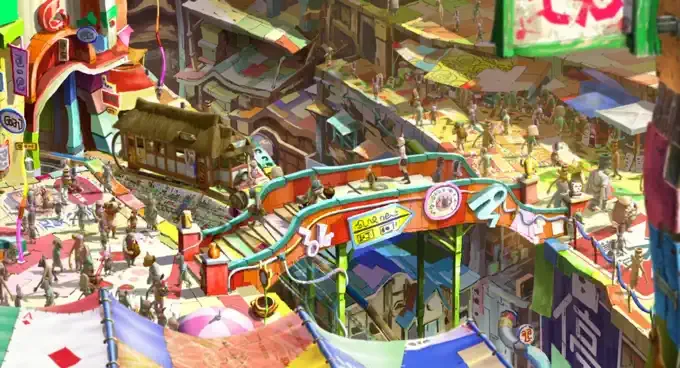
Image credits
Oblivion Island: Haruka and the Magic Mirror
(C)2009フジテレビジョン/Production I.G/電通/ポニーキャニオン
Image sourceHumans are forbidden on the island, where familiar objects belong to unfamiliar inhabitants.
Production I.G imagined the island's raw materials as specific childhood treasures: a teddy bear, a model kit, a well-read picture book and a bright stone picked up in a park. Its inhabitants enter the human world unseen to collect objects people have stopped caring for, then construct their town from what they bring back.
The island was built through a four-year computer-animation project. Production I.G assembled a technical and creative team of about two hundred people to develop the feature, seeking a surface texture distinct from the American 3D films already established in cinemas. Haruka's journey combines that digital construction with the studio's Japanese animation style.


