
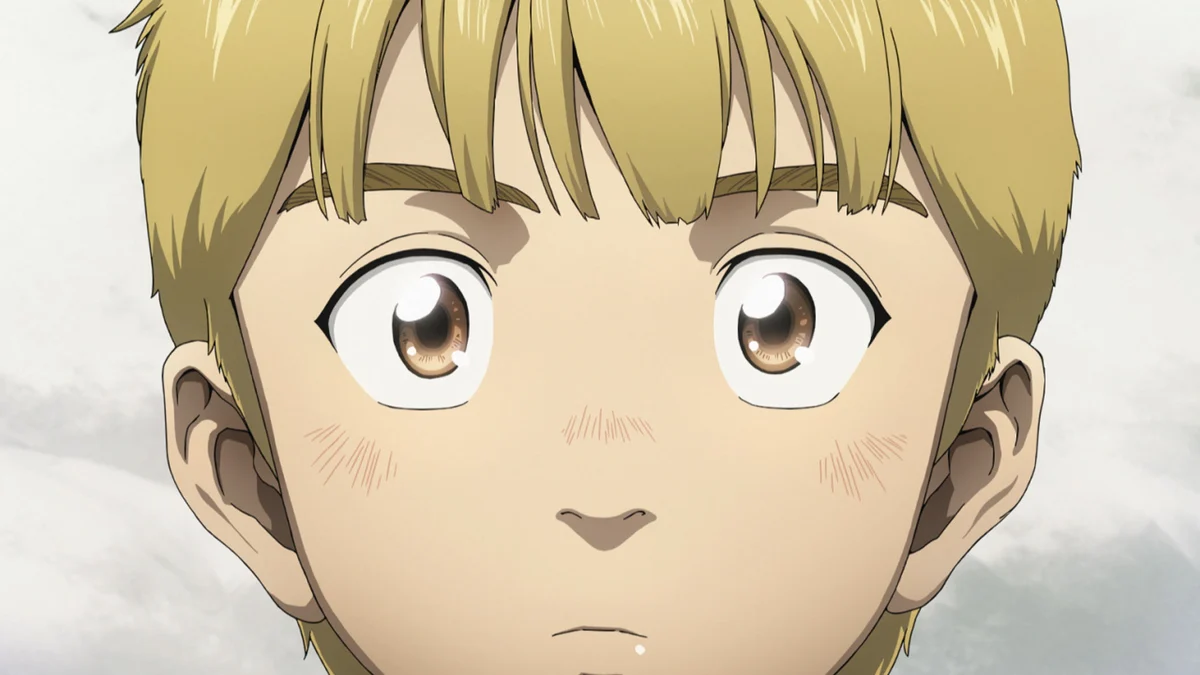
Thorfinn is a child caught in a life of raiding. He remains with Askeladd’s Viking band because he wants to challenge its commander, the man responsible for his father’s death. His skill with a blade earns him a place among the men he hates. Each successful raid brings him closer to another duel, while also tying him more tightly to the life he might otherwise escape.
What does revenge make Thorfinn do?
Thorfinn’s goal is simple to state and difficult to reach. Askeladd will not grant him a duel for free; he sets tasks that require Thorfinn to fight for the band. This arrangement turns revenge into an apprenticeship. Thorfinn gains experience and proximity, but the victories serve Askeladd’s purposes. His anger can make him formidable without making him free.
The series places that pursuit in a world where power is openly taken by force. Armies and leaders treat villages as resources, and survival can depend on choosing the least disastrous allegiance. Thorfinn’s personal vendetta sits inside those political conflicts, so the question is not only whether he can defeat one man. It is what kind of person this system is teaching him to become.

Image credits
Vinland Saga
(C)幸村誠・講談社/ヴィンランド・サガ製作委員会
Image sourceWhy does the story look beyond its fighter?
The first season follows more than Thorfinn’s combat training. Older figures carry different ideas about violence, leadership and what a life might be for. Askeladd is an enemy, commander and source of instruction at once. That unstable relationship keeps the conflict psychologically close: Thorfinn has to depend on the man he wants to kill.
Canute’s place in the campaign offers a second lens. His sheltered position does not keep him outside political danger; it makes other people’s ambitions gather around him. The show can shift from a clash of weapons to a question of who gets to decide the future of a kingdom. Those political stakes widen the setting while keeping the story grounded in people forced to make choices under unequal power.

Image credits
Vinland Saga
(C)幸村誠・講談社/ヴィンランド・サガ製作委員会
Image sourceWhat does Vinland mean before it is a destination?
Before the raids, Thorfinn hears the traveller Leif describe a land far across the sea. The name offers him a way to imagine a world larger than his Icelandic home. His father Thors has already known life as a warrior, so the two generations do not hear adventure in quite the same way. A child can want the excitement of leaving while an adult understands what leaving might require.
The early character images make that change tangible without needing to show a battle result. The round-faced child and the older, watchful boy beside Askeladd belong to the same life. The series has something to put at risk beyond Thorfinn’s survival: the possibility that curiosity, rather than hatred, might determine where he goes next.

Image credits
Vinland Saga
(C)幸村誠・講談社/ヴィンランド・サガ製作委員会
Image sourceWhat kind of Viking story is this?
It uses raids and battles, but its most distinctive tension is the gap between a warrior’s immediate skill and the life that skill serves. Thorfinn can win fights and still have no agency over the campaign. The violence is consequential rather than a tournament ladder: it changes who holds power, who is displaced and what the characters believe they can demand.
Writing about the first season, Anime UK News critic Cold Cobra values the time spent establishing Thorfinn’s childhood before the campaign gathers speed. The slower beginning gives his anger a life to interrupt. The review also resists treating either the raiders or their enemies as an uncomplicated good side. A revenge adventure becomes more troubling when a fighter’s allegiance cannot settle whether his actions are defensible.
Where should you begin?
Start with episode one of the first television season, then continue to season 2. Both seasons have 24 episodes, about 20 hours altogether at a nominal 25 minutes each. The second season changes the setting and focus after the opening revenge story.
For a promotional sample, see First-season PV · Twin Engine announcement. Trailers may include scenes beyond the early setup described here.


